949-829-0910
Power outages can happen unexpectedly, interrupting daily routines and affecting important home systems. A whole-house generator offers a reliable solution by automatically restoring electricity when the power goes out. Unlike portable generators, these systems are permanently installed and designed to power multiple areas of the home without manual setup.
If you’re considering a whole-house generator, understanding how they work and what to look for can make the decision easier. From choosing the right size to selecting the right fuel type, a little preparation goes a long way toward ensuring dependable backup power.
Why Homeowners Choose Whole-House Generators
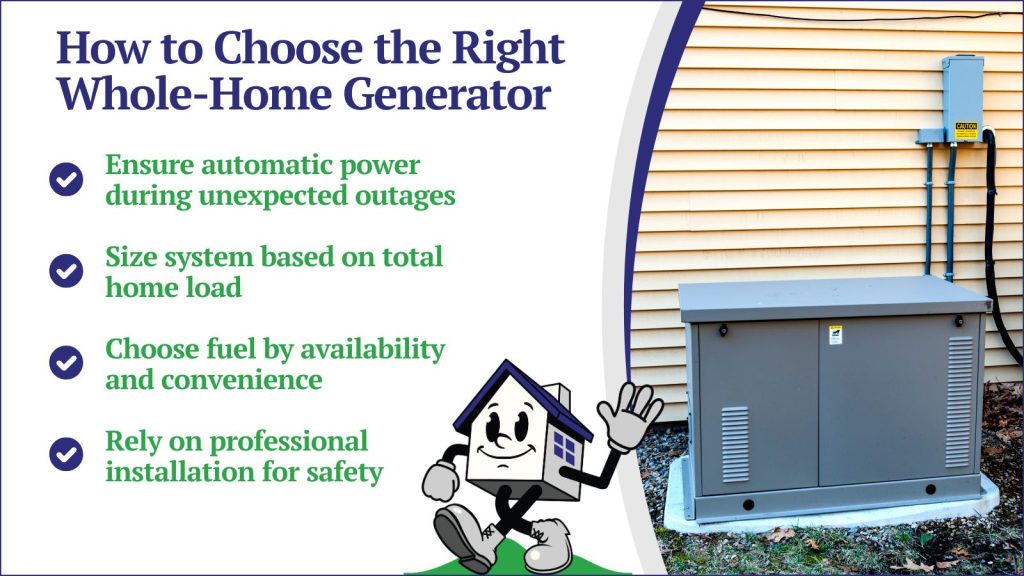
Whole-house generators are designed to provide automatic backup power during an outage. Once the system detects a loss of electricity, it turns on and begins powering the home within seconds.
This means essential appliances and systems—such as lighting, refrigerators, heating and cooling equipment, and other household electronics—can continue operating without interruption. Because the generator is permanently installed and connected to the home’s electrical system, there is no need to manually start it or run extension cords.
For many homeowners, the biggest benefit is the peace of mind that comes from knowing their home can remain comfortable and functional during an unexpected outage.
Choosing the Right Generator Size
Selecting the correct generator size is an important part of the buying process. Generators are measured by the amount of power they can produce, and the right size depends on how much electricity your home needs during an outage.
Some homeowners choose generators that power only essential systems, while others prefer models capable of supporting the entire home. Important appliances such as HVAC systems, refrigerators, lighting, and other equipment all contribute to the total power demand.
A professional evaluation helps determine the right generator capacity so the system can handle your home’s electrical needs efficiently.
Understanding Generator Fuel Options
Whole-house generators typically operate using natural gas, propane, or diesel fuel. Each option has its advantages depending on the home and available fuel supply.
Natural gas generators are popular because they connect directly to a home’s gas line, allowing the generator to run without needing refills. Propane generators depend on stored propane tanks and are often used when natural gas lines are unavailable.
Diesel generators are less common for residential use but may be considered in certain situations. Choosing the right fuel type often depends on convenience, fuel availability, and installation requirements.
The Importance of Professional Installation
Installing a whole-house generator involves connecting the system to your home’s electrical panel using an automatic transfer switch. This device allows the generator to safely supply power during an outage and to switch back to utility power once it is restored.
Professional installation ensures the generator is correctly sized, safely connected, and properly positioned outside the home. A professional also tests the system to verify it functions reliably when needed.
Reliable Backup Power for Your Home
A whole-house generator offers reliable backup power and helps keep your home functioning smoothly during outages. By selecting the appropriate size, fuel source, and installation team, homeowners can experience increased comfort and security.
If you’re considering a whole-house generator, the team at Saddleback Plumbing Heating & Air is here to help guide you through the process and find the right system for your home.
Call Saddleback Plumbing Heating & Air for Fast Professional Service. We have served Orange County since 1981.