949-829-0910
When homeowners consider heating upgrades, forced-air systems often come to mind first. However, radiant heating has become an increasingly popular option for those planning remodels or long-term comfort improvements. Radiant and hydronic heating systems offer a different approach to indoor comfort—one that focuses on steady warmth, quiet operation, and efficient heat delivery. Understanding how radiant heating works and when it makes sense can help homeowners decide whether it’s the right fit for their home.
What Is Radiant Heating?
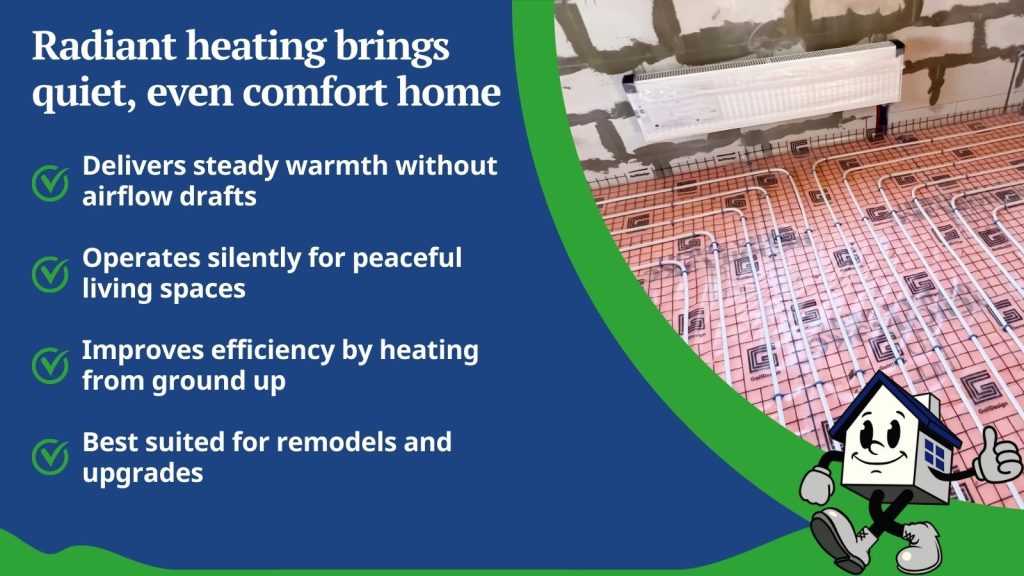
Radiant heating delivers warmth through surfaces rather than blowing heated air through vents. Heat is transferred upward from floors, walls, or panels, warming people and objects directly. Hydronic systems use heated water flowing through tubing, while electric radiant systems use heating elements.
Because heat rises evenly, radiant systems maintain a consistent indoor temperature without drafts or cold spots. This design makes radiant heating especially appealing during home renovations when floors or living spaces are already being updated.
The Comfort Benefits of Radiant Systems
One of the biggest advantages of radiant heating is consistent comfort. Traditional systems can cause temperature swings as air cycles on and off. Radiant heat provides steady warmth that feels natural and balanced throughout the space.
Radiant systems also operate quietly. Without fans or blowers, there’s no background noise during operation. This makes radiant heating ideal for bedrooms, bathrooms, and open living areas where quiet comfort matters.
Energy Efficiency Advantages
Radiant heating systems are designed to deliver heat where it’s needed most—at ground level. This efficient distribution often allows the system to operate at lower temperatures while maintaining comfort.
Because there’s no ductwork, radiant systems avoid energy losses from air leaks or poorly insulated ducts. The result is a heating method that supports efficient performance and consistent warmth during the colder months.
Considerations Before Installing Radiant Heating
While radiant heating offers many benefits, it’s important to consider installation requirements. These systems are often easiest to install during remodeling or new construction, when floors or surfaces are already being opened.
Installation planning is essential to ensure proper system design and long-term reliability. Radiant heating is an investment in comfort, and professional evaluation helps determine whether it’s the best solution for your space and heating goals.
Where Radiant Heating Makes the Most Sense
Radiant heating is commonly used in bathrooms, kitchens, and living areas with tile or hard flooring. It’s also a popular choice for room additions or home upgrades when extending existing ductwork would be impractical.
Homeowners looking to enhance comfort in specific areas often find radiant systems to be a flexible and effective option. When paired with a well-designed overall heating plan, radiant heat can seamlessly complement other systems.
Is Radiant Heating Right for Your Home?
Radiant heating isn’t a one-size-fits-all solution, but it offers clear advantages for the right projects. Homeowners focused on long-term comfort, quiet operation, and efficient heat delivery often find radiant systems worth considering.
A professional assessment helps determine system compatibility, design options, and expected performance, ensuring the upgrade aligns with your home’s needs.
Explore Radiant Heating with Saddleback Plumbing Heating & Air
Radiant heating can transform the way your home feels during cooler months. Saddleback Plumbing Heating & Air provides expert guidance and professional installation to help homeowners explore advanced heating solutions.
Call Saddleback Plumbing Heating & Air for Fast Professional Service. We have served Orange County since 1981.