949-829-0910

Your water heater plays a vital role in your daily comfort, providing hot water for bathing, cleaning, and cooking. When problems arise, it can be difficult to determine whether a repair will fix the issue or whether it is time for a replacement. Understanding the warning signs, including hidden slab leak dangers, and your upgrade options can help you make a confident, long-term decision.
When a Repair Makes Sense
Not every water heater issue requires a full replacement. Many common problems can be resolved with targeted repairs. Faulty thermostats, worn heating elements, or pilot assembly issues can often be fixed without replacing the entire unit.
If your water heater is still producing reliable hot water, shows no signs of corrosion, and has not required frequent service, a professional repair can extend its lifespan. Addressing minor issues early also helps prevent costly hidden plumbing leaks and supports continued performance.
Signs It’s Time to Replace Your Water Heater
In some cases, replacement is the more practical option. Age is one of the most important factors. Traditional tank water heaters typically last 8 to 12 years. As they approach the end of this range, internal components deteriorate, increasing the risk of leaks and reduced efficiency.
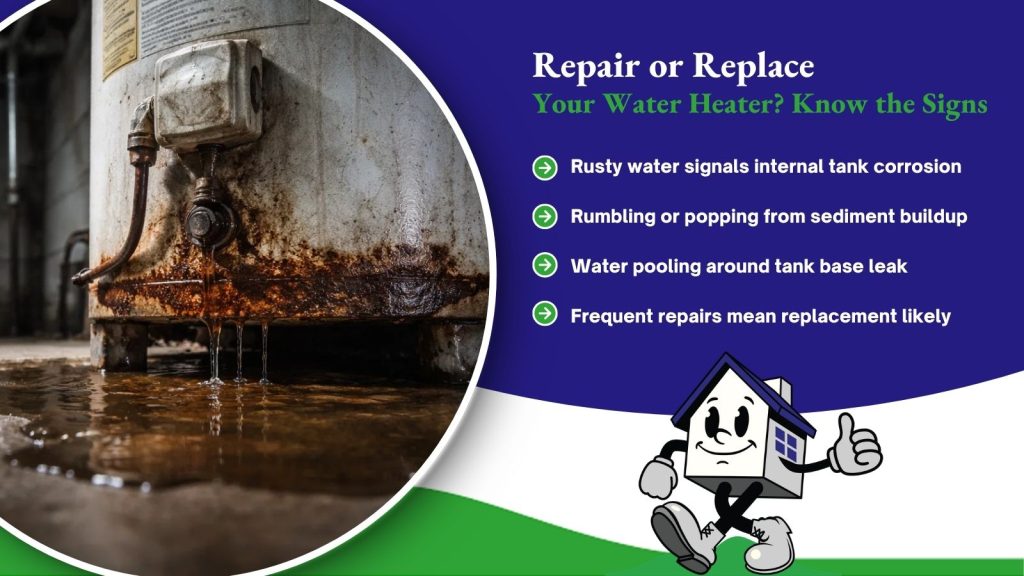
Other warning signs include rust-colored water, unusual rumbling or popping sounds caused by sediment buildup, and visible corrosion on the tank. Water pooling around the base of the unit often indicates a serious plumbing leak, which cannot be repaired.
Frequent breakdowns are another indication that replacement may be more cost-effective than ongoing repairs. A new system provides improved reliability and efficiency.
Upgrading to a Modern Tank Water Heater
If you prefer to stay with a traditional tank model, newer systems offer significant improvements over older units. Enhanced insulation reduces standby heat loss, and faster recovery rates help maintain a steady supply of hot water during periods of higher demand.
A properly sized tank ensures your home has consistent access to hot water while operating more efficiently than outdated equipment.
What to Consider with Tankless Water Heaters
Tankless water heaters provide hot water on demand, eliminating the limitations of a storage tank. This allows for a continuous supply of hot water, even when multiple fixtures are in use.
Tankless systems are also compact and designed for energy efficiency since they only heat water when needed. However, installation may require upgrades to gas lines, electrical systems, or venting. A professional assessment is essential to determine if your home is ready for a tankless conversion and to ensure proper sizing.
The Value of Professional Installation and Guidance
Choosing between repair and replacement involves evaluating your water heater’s condition, performance, and long-term reliability. A licensed plumbing professional can inspect your system, identify potential concerns, and recommend the most effective solution.
Proper installation is critical for both tank and tankless systems. Secure connections, correct venting, and accurate calibration help ensure safe operation and optimal performance.
Make a Confident Decision for Your Home
Taking a proactive approach to water heater maintenance and replacement helps prevent unexpected disruptions to your hot water supply. Whether you opt for a repair, a new tank system, or an upgrade to tankless, professional guidance ensures your system is reliable and efficient.
Frequently Asked Questions
Question: When should I repair my water heater instead of replacing it?
Answer: Repair may be the better choice when the water heater still provides reliable hot water, has no visible corrosion, and has not needed frequent service. Problems involving a faulty thermostat, worn heating element, or pilot assembly can often be corrected without replacing the entire system.
Question: What are the signs that a water heater needs to be replaced?
Answer: Replacement may be necessary when the unit is near the end of its expected lifespan, breaks down repeatedly, or shows rust, corrosion, rumbling noises, or reduced efficiency. Water pooling around the tank’s base can indicate internal tank failure, which generally cannot be repaired.
Question: How long does a traditional tank water heater last?
Answer: A traditional tank water heater typically lasts between 8 and 12 years. Its actual lifespan depends on maintenance, water quality, household demand, and installation quality. As the system ages, deteriorating internal components can increase the likelihood of leaks, inconsistent heating, and higher energy use.
Question: What are the benefits of upgrading to a tankless water heater?
Answer: A tankless water heater heats water only when it is needed, which can improve energy efficiency and eliminate standby heat loss. It also provides a continuous hot water supply and takes up less space. However, the system must be properly sized for the home’s peak demand.
Question: Can any home be converted to a tankless water heater?
Answer: Many homes can be converted, but installation requirements vary. A tankless system may require changes to the gas line, electrical service, or venting. A professional assessment can determine whether the property is ready for conversion and identify the correct system size for dependable performance.
Call Saddleback Plumbing Heating & Air for Fast Professional Plumbing. We have served Orange County since 1981.